Cibutex raises awareness, facilitates and drives change and promotes cooperation and collaboration within the textile industry.
What is ‘the textile industry’?
The textile industry is the collective name for the farming of fibers, the extraction of resources (esp. crude oil) for synthetic fibers, the processing of fibers into yarns and fabrics, the confectioning of fabrics into finished products and the transportation, distribution, wholesale, sale and usage, maintenance and end-of-life treatment of textile products.
Global industry
The textile industry is a large, complex, multiphased industry that spans the globe. Worldwide, it employs over 140 million people, mainly in the manufacturing processes.
Fibers
For all textile products the starting point is fibers. Fibers are divided in natural fibers (cotton, wool, linen, hemp etc.) and synthetic fibers (polyester, nylon,viscose etc.). Fibers are made into yarn by various techniques, the yarns are then made into fabric, the fabrics are used to make the textile products.
Below: origin and destination of fibres in 2024. Sources: Textile Exchange, Material Markets Report (Sept. 2025) and European Technology Platform, Textiles of the Future (July 2024).

End-of-Life
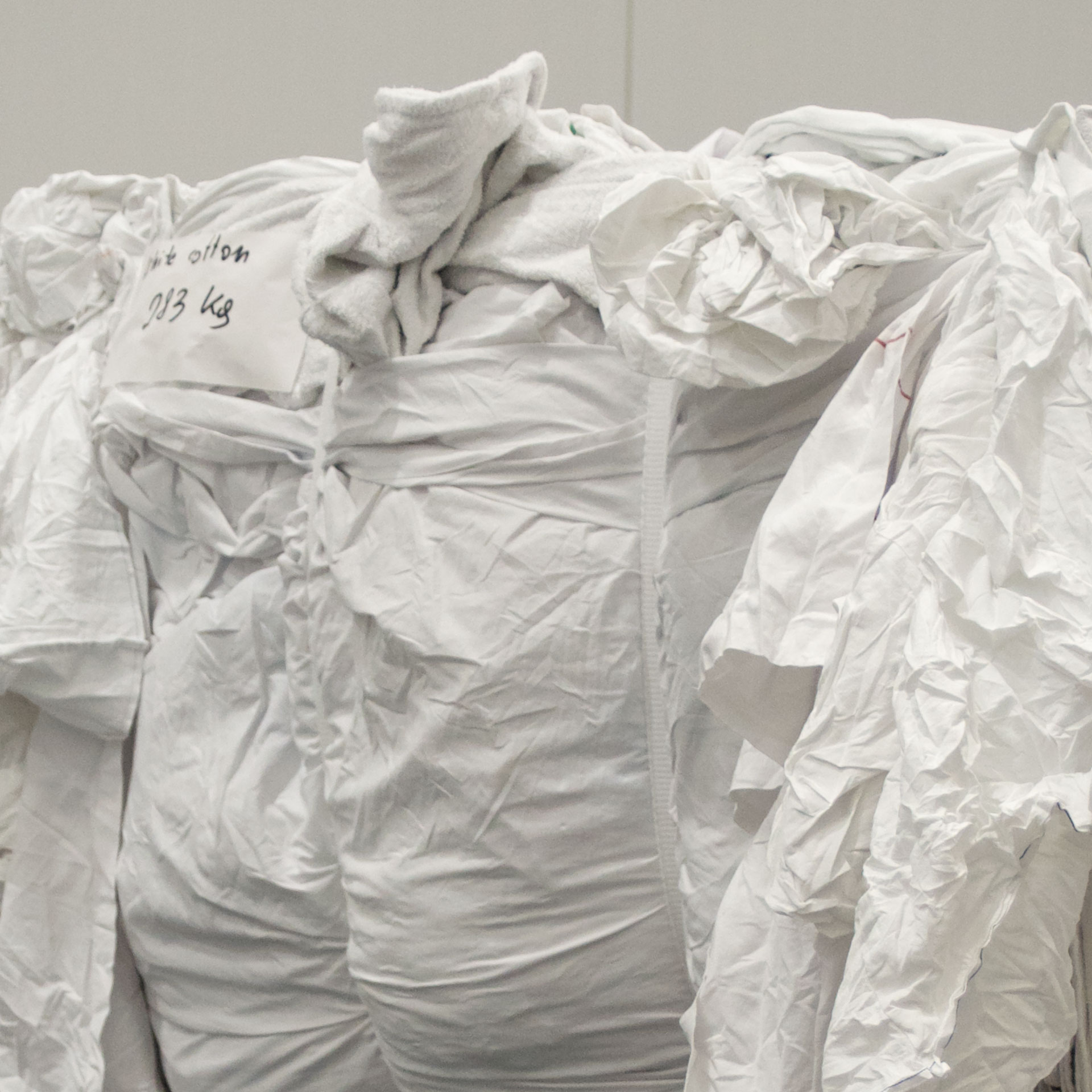
The use of textile products wears them down. Especially washing and cleaning decrease the quality of a textile product. At some stage, the product can no longer be used and is discarded. It then enters its end-of-life stage. For decades, textiles in this phase have been considered trash that the industry just wants to get rid of. Dumping or incinerating were the easiest options. By 2050, the world will be dealing with 150 million tonnes of disposed textiles every year (source: Boston Consulting Group).
Closing the Loop
For the next decades, up to 2050, the textile industry faces the transition to a circular business model. This does not only imply that end-of-life materials need to be treated differently. Reusing and recycling, on an industrial scale, need to become the new normal. Using recycled content in textile production needs to be implemented at the same pace. Supply, demand and adequate legislation are crucial. As is the duty of the entire industry to commit to the transition. Cibutex embraces and drives that commitment.
Just 0.3% of materials used by the global textile industry come from recycled sources, with almost no textile-to-textile recycling
© Circularity Gap Report, 2025